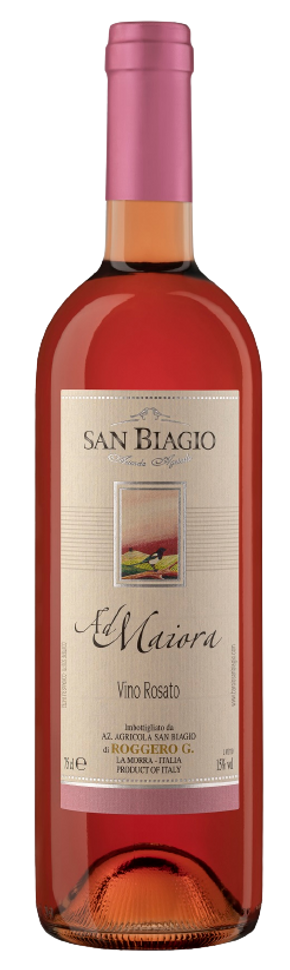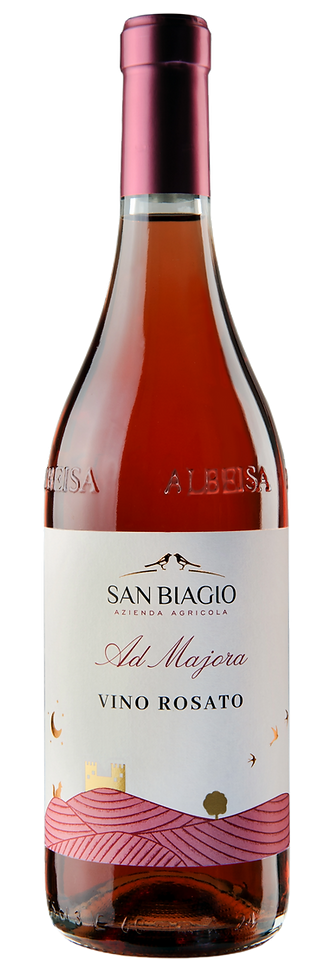
Ad Majora Rosé Wine
Rose and white fruits, flavour and great volume
Behind a marked sapidity, the intense notes of withered rose and white berries (gooseberry and currant) that impart freshness and immediate pleasantness, it strikes for its great persistence capable of pushing it up to important combinations or as a closing wine for a tasting.
Grape variety
Nebbiolo grown in Guyot with sustainable viticulture. A variety of great versatility, capable of producing wines with extraordinary freshness and at the same time products of great complexity with tertiary hints such as Barolo and Barbaresco.
Harvest
The Ad Majora Rosé Wine is a small production obtained exclusively from our vineyards from hand-picked grapes with late harvest to allow complete ripening with slight withering. It is usually done in the last part of October to allow a slight overripening.
Winemaking
Destemming and delicate crushing followed by maceration on the skins for only 1 day and subsequent separation from the crushed grapes with flotation. The naturally clarified must is fermented very slowly at a temperature of about 12°C for about twenty days during which the continuous stirring stimulates the fermentation and enzymatic processes, favoring the production of the rich aromatic set and the particular fruity and floral notes. Subsequently, the Ad Majora Rosé Wine remains on the lees for about 2 months, a period in which it acquires volume and richness to well balance the aromatic, alcoholic and acidic power of this wine; it finishes cooling at -2 -4°C for a natural tartaric stabilization with the use of cold only and a final racking for ageing in barrels until April.
Bottling and subsequent ageing for a minimum of 8 months, a period during which the notes of rose and small white fruits are accentuated.
Serving suggestion
Temperature: 10-12°C but not below 8°C to preserve complexity and freshness. To drink in 5 years.
Pairings
The great flavour makes it excellent as an aperitif or for a wide range of combinations: both hot and cold appetizers, savoury pies, shellfish and fish dishes, first courses and white meats, even pastries. It is striking for its volume in the mouth and the great softness capable of pushing it up to important combinations such as blue cheeses or as a closing wine for a tasting.
Vineyard characteristics
Area of origin: produced with grapes from a blend of different vineyards
Exposure: West
Altitude: 350-390 m above sea level
Soil: Laminate Sant'Agata marl interspersed with layers of sandstone and conglomerates
Year of planting: 2006 -2021
Tasting notes
Colour: bright with pale cherry tones.
Bouquet: while reconfirming the notes detected on the nose, the apparent freshness and immediate pleasantness leaves room for a great structure that pleasantly amazes for the balance between flavour, sweetness and great persistence, able to push it up to important combinations such as blue cheeses or after tasting even far more prestigious red wines.
Palate: intense floral notes, withered rose and white berries among which gooseberry and currant stand out. Overall intense and beautifully integrated.
Available formats

Ad Majora Rosé Wine
Rose and white fruits, flavour and great volume
Behind a marked sapidity, the intense notes of withered rose and white berries (gooseberry and currant) that impart freshness and immediate pleasantness, it strikes for its great persistence capable of pushing it up to important combinations or as a closing wine for a tasting.
Grape variety
Nebbiolo grown in Guyot with sustainable viticulture. A variety of great versatility, capable of producing wines with extraordinary freshness and at the same time products of great complexity with tertiary hints such as Barolo and Barbaresco.
Harvest
The Ad Majora Rosé Wine is a small production obtained exclusively from our vineyards from hand-picked grapes with late harvest to allow complete ripening with slight withering. It is usually done in the last part of October to allow a slight overripening.
Winemaking
Destemming and delicate crushing followed by maceration on the skins for only 1 day and subsequent separation from the crushed grapes with flotation. The naturally clarified must is fermented very slowly at a temperature of about 12°C for about twenty days during which the continuous stirring stimulates the fermentation and enzymatic processes, favoring the production of the rich aromatic set and the particular fruity and floral notes. Subsequently, the Ad Majora Rosé Wine remains on the lees for about 2 months, a period in which it acquires volume and richness to well balance the aromatic, alcoholic and acidic power of this wine; it finishes cooling at -2 -4°C for a natural tartaric stabilization with the use of cold only and a final racking for ageing in barrels until April.
Bottling and subsequent ageing for a minimum of 8 months, a period during which the notes of rose and small white fruits are accentuated.
Serving suggestion
Temperature: 10-12°C but not below 8°C to preserve complexity and freshness. To drink in 5 years.
Pairings
The great flavour makes it excellent as an aperitif or for a wide range of combinations: both hot and cold appetizers, savoury pies, shellfish and fish dishes, first courses and white meats, even pastries. It is striking for its volume in the mouth and the great softness capable of pushing it up to important combinations such as blue cheeses or as a closing wine for a tasting.
Vineyard characteristics
Area of origin: produced with grapes from a blend of different vineyards
Exposure: West
Altitude: 350-390 m above sea level
Soil: Laminate Sant'Agata marl interspersed with layers of sandstone and conglomerates
Year of planting: 2006 -2021
Tasting notes
Colour: bright with pale cherry tones.
Bouquet: while reconfirming the notes detected on the nose, the apparent freshness and immediate pleasantness leaves room for a great structure that pleasantly amazes for the balance between flavour, sweetness and great persistence, able to push it up to important combinations such as blue cheeses or after tasting even far more prestigious red wines.
Palate: intense floral notes, withered rose and white berries among which gooseberry and currant stand out. Overall intense and beautifully integrated.
Available formats
Vineyard Characteristics
Area of origin: La Morra and Verduno
Exposure: West
Average altitude: 350 - 390 m above sea level
Year of planting: 1960-2021
Soil: Laminate Sant'Agata marl interspersed with layers of sandstone and conglomerates
Our heritage
For over a century, our family has preserved a winemaking tradition that is reflected in our historic labels, true symbols of the winery's identity. From the first vinifications in the vineyards of La Morra to the most recent productions, each label tells a passage of our evolution.