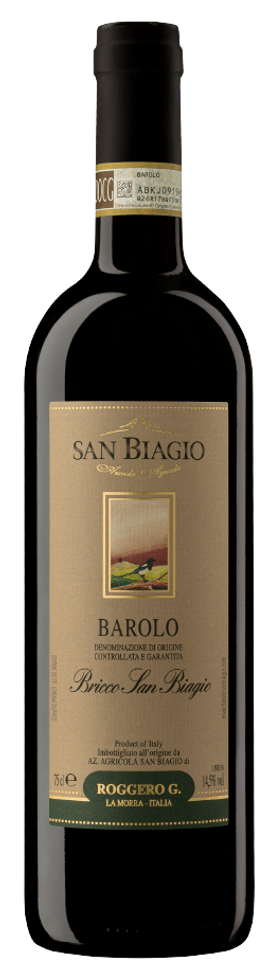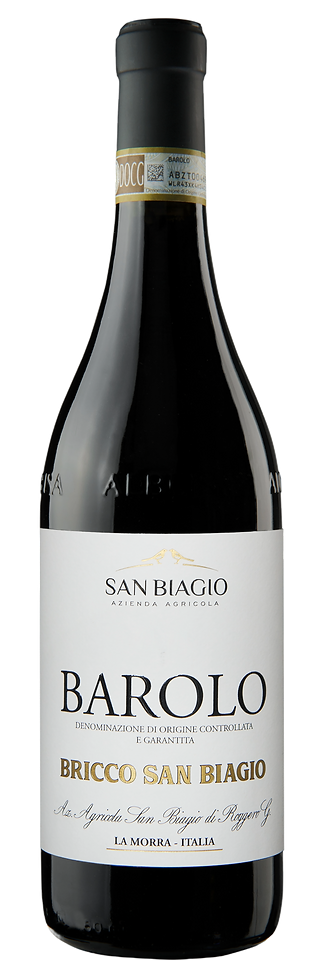
Barolo

DOCG Bricco San Biagio

Tradition, intensity and elegance

It amazes for the refinement of the sweet, soft and well-defined tones that characterize it.

Obtained from the magnificent six-hectare vineyard with a single body recognizable from afar by the large oak tree that rises in the center, it is characterized by excellent exposure and the particular basin shape that allows heat to be captured by retaining it during the night.

  • Grape variety

    Nebbiolo

  • Harvest

    Preceded by summer thinning, it is carried out by hand selection towards the beginning of October; it is usually anticipated by virtue of the advanced age of the vines with an excellent position and a good vegetative balance guaranteed by the soil which ensures the complete ripening of the fruit with a general increase in the quality essential for the production of an excellent wine.

  • Winemaking

    The grapes are gently destemmed with light crushing and subsequent cold static maceration on the skins to promote the natural enzymatic processes of 36 hours. Frequent punching down follows, carried out with extreme care at a temperature of 26° to favor the production of the rich aromatic set and the extraction of the noblest polyphenols, stimulating the fermentation processes, capable of transferring from the grape to the wine the unique "terroir" that this sub-area can express. After about 20 days of fermentation, the cap is splinted for a further maceration of over a month during which malolactic fermentation is completed.


    After pressing off and racking to remove the coarse lees, Barolo Bricco San Biagio matures in large Slavonian oak vats for 30 months, about a couple of which are still on the lees, a period during which it acquires structure and volume, growing and expanding the floral, fruity and spice sensations. This is followed by a 12-month refinement in the bottle during which the tannins soften, the sweeter sensations that characterize it appear. The balsamic notes of eucalyptus, medicinal herbs blend with the more complex ethereal notes of lacquer and resin.

  • Serving suggestion

    Temperature: 16-18°C.  It amazes for the succession of intense sweet hints of face powder and peach pit contrasted with the bitter ones of cedar and pronounces spice notes.

    The long, silky tannins evolve pleasantly into warm, elegant sensations of licorice and dark chocolate.

    Pleasant to drink immediately but certainly capable of giving rare emotions after long refinements of up to 30-40 years 

    Glass: Balloon-shaped glass

  • Pairings

    A wine that strikes for elegance, refinement and persistence on the palate. Suitable to accompany structured first courses and preparations with dark chocolate. It finds its finest combination with main courses of red meats and game, medium and long-aged cheeses. Also excellent at the end of a meal.

  • Tasting notes

    Colour: intense and brilliant ruby red with more mature nuances garnet with advancing age

    Bouquet: intense and well defined. The notes of cherries in alcohol and wild rose, plum jam and small fruits stand out clearly, followed by persuasive hints of face powder and peach pit balanced by those of cedar, licorice and dark chocolate. The balsamic tones reminiscent of eucalyptus and resin, the sensations of medicinal herbs and menthol are suggestive; In the most refined wines, the characteristic notes of dried figs and mushrooms are distinguished, with nuances of undergrowth, tobacco and leather.

    Palate: it impresses with its richness of taste and its harmonious completeness. Its elegant tannins begin to spread on the palate without weighing it down and then turn into soft and enveloping sensations of cherry in syrup, licorice and chocolate powder, very long and persistent. A fresh mentholated retro-nasal sensation and characteristic notes of tobacco and goudron are pleasant on the finish.

  • Vineyard characteristics

    Area of origin: Bricco San Biagio - La Morra. Sanctus Blaxius*: historic toponym already reported in the municipal land registry of 1477; until the fifteenth century the homonymous church and manor castle stood here (ecclesia et castrum Sancti Blaxii) now disappeared, the strong point of Marcenasco.

    Exposure: East – South – East

    Average altitude: 270 m above sea level

    Year of planting: 1965

    Soil: Diano d'Alba sandstone typical of Castiglione Falletto mixed with Sant'Agata Marls.


    *A. Gambera, B. Molino, La Morra fra Quattrocento e Cinquecento, vol. II, I toponimi, Agorà e Comune di La Morra, 2019

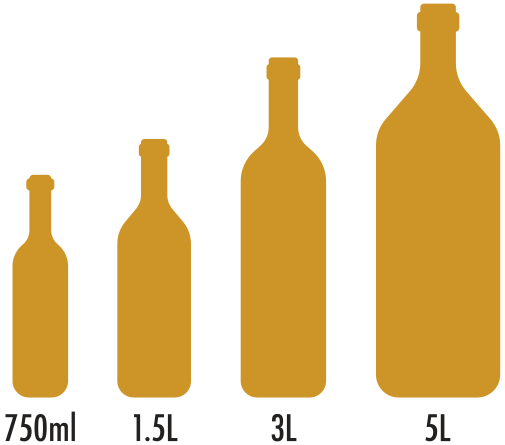
  • Available formats


Technical sheet and useful files View press kit

Barolo

DOCG Bricco San Biagio

Tradition, intensity and elegance

It amazes for the refinement of the sweet, soft and well-defined tones that characterize it.

Obtained from the magnificent six-hectare vineyard with a single body recognizable from afar by the large oak tree that rises in the center, it is characterized by excellent exposure and the particular basin shape that allows heat to be captured by retaining it during the night.

  • Grape variety

    Nebbiolo

  • Harvest

    Preceded by summer thinning, it is carried out by hand selection towards the beginning of October; it is usually anticipated by virtue of the advanced age of the vines with an excellent position and a good vegetative balance guaranteed by the soil which ensures the complete ripening of the fruit with a general increase in the quality essential for the production of an excellent wine.

  • Winemaking

    The grapes are gently destemmed with light crushing and subsequent cold static maceration on the skins to promote the natural enzymatic processes of 36 hours. Frequent punching down follows, carried out with extreme care at a temperature of 26° to favor the production of the rich aromatic set and the extraction of the noblest polyphenols, stimulating the fermentation processes, capable of transferring from the grape to the wine the unique "terroir" that this sub-area can express. After about 20 days of fermentation, the cap is splinted for a further maceration of over a month during which malolactic fermentation is completed.


    After pressing off and racking to remove the coarse lees, Barolo Bricco San Biagio matures in large Slavonian oak vats for 30 months, about a couple of which are still on the lees, a period during which it acquires structure and volume, growing and expanding the floral, fruity and spice sensations. This is followed by a 12-month refinement in the bottle during which the tannins soften, the sweeter sensations that characterize it appear. The balsamic notes of eucalyptus, medicinal herbs blend with the more complex ethereal notes of lacquer and resin.

  • Serving suggestion

    Temperature: 16-18°C.  It amazes for the succession of intense sweet hints of face powder and peach pit contrasted with the bitter ones of cedar and pronounces spice notes.

    The long, silky tannins evolve pleasantly into warm, elegant sensations of licorice and dark chocolate.

    Pleasant to drink immediately but certainly capable of giving rare emotions after long refinements of up to 30-40 years 

    Glass: Balloon-shaped glass

  • Pairings

    A wine that strikes for elegance, refinement and persistence on the palate. Suitable to accompany structured first courses and preparations with dark chocolate. It finds its finest combination with main courses of red meats and game, medium and long-aged cheeses. Also excellent at the end of a meal.

  • Tasting notes

    Colour: intense and brilliant ruby red with more mature nuances garnet with advancing age

    Bouquet: intense and well defined. The notes of cherries in alcohol and wild rose, plum jam and small fruits stand out clearly, followed by persuasive hints of face powder and peach pit balanced by those of cedar, licorice and dark chocolate. The balsamic tones reminiscent of eucalyptus and resin, the sensations of medicinal herbs and menthol are suggestive; In the most refined wines, the characteristic notes of dried figs and mushrooms are distinguished, with nuances of undergrowth, tobacco and leather.

    Palate: it impresses with its richness of taste and its harmonious completeness. Its elegant tannins begin to spread on the palate without weighing it down and then turn into soft and enveloping sensations of cherry in syrup, licorice and chocolate powder, very long and persistent. A fresh mentholated retro-nasal sensation and characteristic notes of tobacco and goudron are pleasant on the finish.

  • Vineyard characteristics

    Area of origin: Bricco San Biagio - La Morra. Sanctus Blaxius*: historic toponym already reported in the municipal land registry of 1477; until the fifteenth century the homonymous church and manor castle stood here (ecclesia et castrum Sancti Blaxii) now disappeared, the strong point of Marcenasco.

    Exposure: East – South – East

    Average altitude: 270 m above sea level

    Year of planting: 1965

    Soil: Diano d'Alba sandstone typical of Castiglione Falletto mixed with Sant'Agata Marls.


    *A. Gambera, B. Molino, La Morra fra Quattrocento e Cinquecento, vol. II, I toponimi, Agorà e Comune di La Morra, 2019

  • Available formats


Technical sheet and useful files View press kit

Bricco San Biagio

Area of origin: Bricco San Biagio - La Morra.

Sanctus Blaxius*: historical toponym already reported in the municipal land registry of 1477; until the fifteenth century the homonymous church and manor castle stood here (ecclesia et castrum Sancti Blaxii) now disappeared, the strong point of Marcenasco.


Magnificent and important, our Bricco San Biagio vineyard is characterized by the exclusive presence in La Morra of the Sandstones of Diano d'Alba, by the excellent exposure and by the particular basin shape that allows you to capture heat by retaining it during the night. It lies on the homonymous hilltop which stands rounded as a strategic point of the territory and can be recognized from afar by the large oak that stands out in the centre and which distinguishes the oldest part intended for Barolo RISERVA.


Exposure: East – South-East

Average altitude: 270 m above sea level

Year of planting: 1965

Soil: Sandstones of Diano d'Alba and marginally Marls of Sant'Agata Fossil and Sandy


*A. Gambera, B. Molino, La Morra fra Quattrocento e Cinquecento, vol. II, I toponimi, Agorà e Comune di La Morra, 2019

Products obtained:

Our heritage

For over a century, our family has preserved a winemaking tradition that is reflected in our historic labels, true symbols of the winery's identity. From the first vinifications in the vineyards of La Morra to the most recent productions, each label tells a passage of our evolution.