Barolo
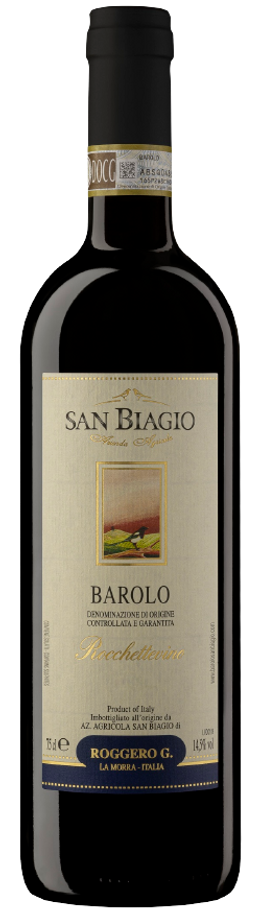
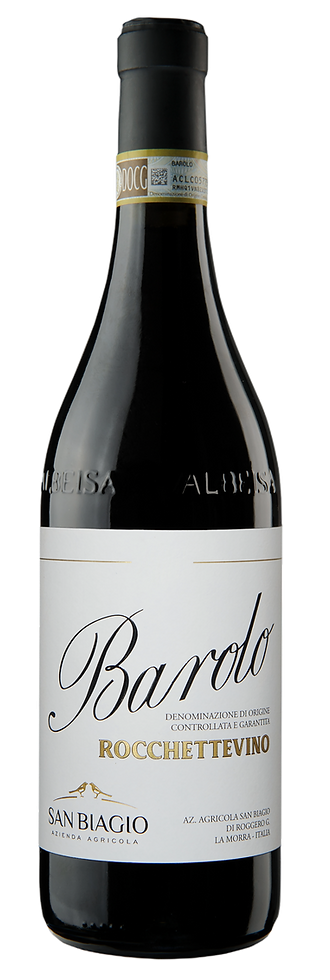
DOCG Rocchettevino
Intoxicating floral bouquet and elegance
It amazes with the fascinating nuance of flowers and fruits that it expresses with immediacy in its aromas. Refined and velvety also on the palate where the spicy and slightly toasted notes complement the sweeter ones.
Grape variety
Nebbiolo
Harvest
The late harvest with manual selection is carried out in the last part of October, to allow a slight drying that ensures optimal ripening of the polyphenols and fruit responsible for the elegance and complexity of Barolo Rocchettevino.
Winemaking
The grapes are gently destemmed with light crushing and subsequent cold static maceration on the skins to promote the natural enzymatic processes of 24 hours. Frequent punching down follows, carried out with extreme care at a temperature of 26° to stimulate the fermentation processes, favouring the production of the rich aromatic set and a good extraction of the noblest polyphenols. After about 15 days of fermentation, the cap is splinted for a further 20 days of maceration, (time) during which the malolactic fermentation is completed and the most intense floral and fruity notes are defined. After racking, the Barolo Rocchettevino is aged in oak wood for about two and a half years, the first 18 months of which in second and third passage barrels and the following year in small Slavonian barrels. (During this period, of which the first month is still on the lees, the wine acquires volume, richness and the spicy sensations expand).
This is followed by the maturation in the bottle for a year during which the wine softens, the floral and fruity notes blend with the spicy ones, expanding and the more complex balsamic and ethereal notes of star anise and goudron appear.
Serving suggestion
Temperature: 16-18°C. The pleasantness it expresses makes it already suitable for consumption; further refinement embellishes the charm and varietal complexity that Nebbiolo is able to express in the Langa: 10-20 years
Glass: Balloon-shaped glass
Pairings
The great elegance given by the breadth of the olfactory complement and the freshness of the bouquet, makes Barolo Rocchettevino suitable for multiple combinations: both hot and cold appetizers, savoury pies and first courses, second courses of structured red or white meats (duck, guinea fowl), medium and long-aged cheeses.
Tasting notes
Colour: bright ruby red with more mature nuances with advancing age
Bouquet: broad and complex floral bouquet. Notes of jam, cherry in syrup and nuances of small fruits stand out, well blended with raspberry in evidence. The nuances of pink and the delicate hints of violet are evocative, which are combined with the sweet and spicy hints of star anise and chocolate. This is followed by balsamic and ethereal tones reminiscent of eucalyptus, resin and medicinal herbs.
Pleasant on the finish especially for the more refined wines the sensations of licorice and Goudron with nuances of undergrowth, tobacco and leather.
Taste: enveloping and harmonious, it excites for its softness and gustatory complexity;
sweet notes of fruit and spices prevail with pleasant references to black berry fruit jam and chocolate powder. Soft tannins and well balanced by a pleasant acidity and good alcohol content. For the more refined vintages, evident sensations of licorice, tobacco and goudron on the finish.
Vineyard characteristics
Area of origin: Rocchettevino - La Morra. Ronchetovinum*, a historic toponym already reported in the municipal land registry of 1477; it dominates the entire panorama of the Langhe. The very sunny exposure and the high temperature changes guarantee a generous Barolo, well-structured and with extraordinary elegance in aromas and gustatory richness.
Exposure: East
Average altitude: 370 m above sea level
Year of planting: 1998
Soil: laminated Sant'Agata marl.
A. Gambera, B. Molino, La Morra fra Quattrocento e Cinquecento, vol. II, I toponimi, Agorà e Comune di La Morra, 2019
Available formats
Barolo
DOCG Rocchettevino
Intoxicating floral bouquet and elegance
It amazes with the fascinating nuance of flowers and fruits that it expresses with immediacy in its aromas. Refined and velvety also on the palate where the spicy and slightly toasted notes complement the sweeter ones.
Grape variety
Nebbiolo
Harvest
The late harvest with manual selection is carried out in the last part of October, to allow a slight drying that ensures optimal ripening of the polyphenols and fruit responsible for the elegance and complexity of Barolo Rocchettevino.
Winemaking
The grapes are gently destemmed with light crushing and subsequent cold static maceration on the skins to promote the natural enzymatic processes of 24 hours. Frequent punching down follows, carried out with extreme care at a temperature of 26° to stimulate the fermentation processes, favouring the production of the rich aromatic set and a good extraction of the noblest polyphenols. After about 15 days of fermentation, the cap is splinted for a further 20 days of maceration, (time) during which the malolactic fermentation is completed and the most intense floral and fruity notes are defined. After racking, the Barolo Rocchettevino is aged in oak wood for about two and a half years, the first 18 months of which in second and third passage barrels and the following year in small Slavonian barrels. (During this period, of which the first month is still on the lees, the wine acquires volume, richness and the spicy sensations expand).
This is followed by the maturation in the bottle for a year during which the wine softens, the floral and fruity notes blend with the spicy ones, expanding and the more complex balsamic and ethereal notes of star anise and goudron appear.
Serving suggestion
Temperature: 16-18°C. The pleasantness it expresses makes it already suitable for consumption; further refinement embellishes the charm and varietal complexity that Nebbiolo is able to express in the Langa: 10-20 years
Glass: Balloon-shaped glass
Pairings
The great elegance given by the breadth of the olfactory complement and the freshness of the bouquet, makes Barolo Rocchettevino suitable for multiple combinations: both hot and cold appetizers, savoury pies and first courses, second courses of structured red or white meats (duck, guinea fowl), medium and long-aged cheeses.
Tasting notes
Colour: bright ruby red with more mature nuances with advancing age
Bouquet: broad and complex floral bouquet. Notes of jam, cherry in syrup and nuances of small fruits stand out, well blended with raspberry in evidence. The nuances of pink and the delicate hints of violet are evocative, which are combined with the sweet and spicy hints of star anise and chocolate. This is followed by balsamic and ethereal tones reminiscent of eucalyptus, resin and medicinal herbs.
Pleasant on the finish especially for the more refined wines the sensations of licorice and Goudron with nuances of undergrowth, tobacco and leather.
Taste: enveloping and harmonious, it excites for its softness and gustatory complexity;
sweet notes of fruit and spices prevail with pleasant references to black berry fruit jam and chocolate powder. Soft tannins and well balanced by a pleasant acidity and good alcohol content. For the more refined vintages, evident sensations of licorice, tobacco and goudron on the finish.
Vineyard characteristics
Area of origin: Rocchettevino - La Morra. Ronchetovinum*, a historic toponym already reported in the municipal land registry of 1477; it dominates the entire panorama of the Langhe. The very sunny exposure and the high temperature changes guarantee a generous Barolo, well-structured and with extraordinary elegance in aromas and gustatory richness.
Exposure: East
Average altitude: 370 m above sea level
Year of planting: 1998
Soil: laminated Sant'Agata marl.
A. Gambera, B. Molino, La Morra fra Quattrocento e Cinquecento, vol. II, I toponimi, Agorà e Comune di La Morra, 2019
Available formats
Rocchettevino DOCG
Area of origin: Rocchettevino - La Morra.
Ronchetovinum*, a historic toponym already reported in the municipal land registry of 1477; it dominates the entire panorama of the Langhe. The very sunny exposure and the high temperature changes guarantee a generous Barolo, well-structured and with extraordinary elegance in aromas and gustatory richness.
Exposure: East
Average altitude: 370 m above sea level
Year of planting: 1998
Soil: Laminated fossil Sant'Agata marl
*A. Gambera, B. Molino, La Morra fra Quattrocento e Cinquecento, vol. II, I toponimi, Agorà e Comune di La Morra, 2019
Product obtained:
Our heritage
For over a century, our family has preserved a winemaking tradition that is reflected in our historic labels, true symbols of the winery's identity. From the first vinifications in the vineyards of La Morra to the most recent productions, each label tells a passage of our evolution.