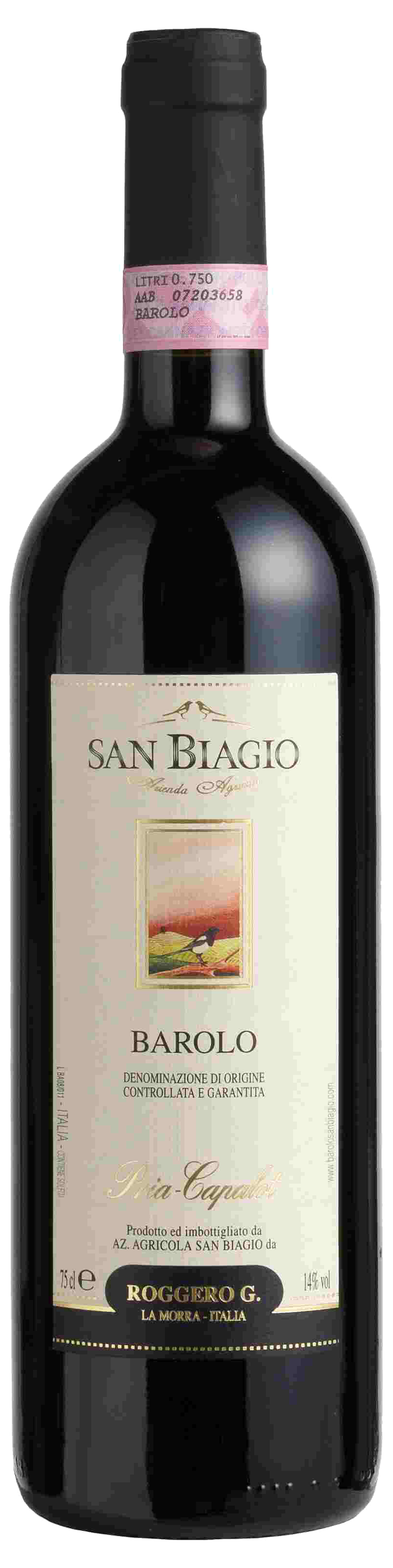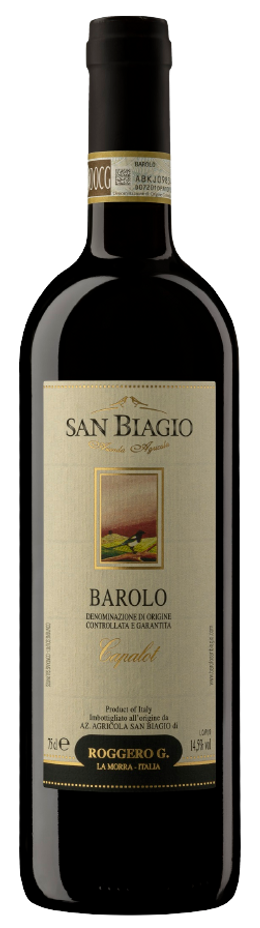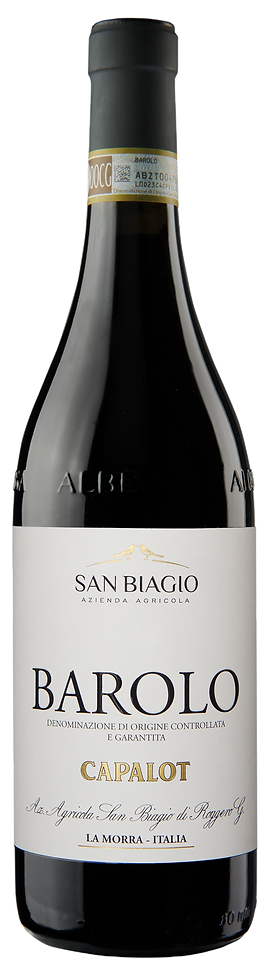
Barolo
DOCG Capalot
Intense, savory, with elegant balsamic and hydrocarbon notes
Marked minerality and notes of hydrocarbon enhanced by varietal elegance. Interesting for the scents that recall flint and graphite perfectly balanced with the fruity notes of cherry in syrup and small fruits, the floral notes of rose and violet, and the balsamic tones reminiscent of eucalyptus, resin and medicinal herbs.
Grape variety
Nebbiolo
Harvest
Given the good vegetative energy that characterizes this sub-area, the laborious manual operations of leaf removal and thinning carried out during the summer months are decisive, essential to achieve a good vegetative balance, which is fundamental for the production of an excellent wine.
The harvest with manual selection takes place in the first days of October, usually delayed to ensure complete fruit ripeness with balanced acidity and polyphenolic components and an overall improvement in wine quality.
Winemaking
The grapes are gently destemmed with light crushing and subsequent cold static maceration on the skins to promote the natural enzymatic processes of 36 hours. Frequent punching down follows, carried out with extreme care at a temperature of 26° to promote the production of the complex aromatic set and the extraction of the wide polyphenolic spectrum by stimulating the fermentation processes, capable of transferring the mineral and hydrocarbon notes characteristic of this sub-area from the grape to the wine. After about 15 days of fermentation, the cap is splinted for a further maceration of over a month during which malolactic fermentation is completed.
After pressing off and racking to remove the coarse lees, Barolo Capalot remains on the yeast for about a month, a period in which malolactic fermentation is completed, it acquires volume, richness and the characteristic fruity and spicy notes.
This is followed by an 18-month oak aging in second and third passage barrels and a subsequent year in large Slavonian barrels. This is followed by a year's maturation in the bottle during which the wine softens, the floral, fruity and spice notes grow and expand and the more complex balsamic notes and nuances of hydrocarbons, lacquers and resin appear.
Serving suggestion
Temperature: 16-18°C. A versatile wine: intriguing for its flavour combined with balsamic and smoky notes of graphite and flint
Glass: Balloon-shaped glass
Pairings
Wine suitable for multiple combinations such as both hot and cold appetizers, savory pies or first courses with meat sauce where it manages to express a drinkability that excites for its fresh richness and flavor. It finds the finest combination alongside lamb, pork and especially beef dishes: especially for preparations on the grill with rare cooking where the notes of wine and meat blend with great harmony. Also excellent with game and medium-long aged cheeses.
Tasting notes
Colour: intense and brilliant ruby red. More evolved shades appear with advancing age.
Bouquet: immediate, fresh and balsamic. Red fruit notes stand out with nuances of cherry in syrup and small berries: ripe blackberries, blueberries and raspberries. This is followed by floral sensations of violet, rose, and above all balsamic tones reminiscent of resin, eucalyptus and medicinal herbs with nettle and wild mint – menthol – prominently featured. The marked mineral and smoky scents that recall hydrocarbons, flint with a hint of undergrowth and spices (star anise and licorice) close the profile.
Palate: soft, enveloping and harmonious with black berries and interesting mineral sensations that make it fresh and savory on the palate. It expresses elegance and structure with dense and silky tannins (soft but well present) that leave room for mentholated tones and a hint of hydrocarbons and toasted notes.
Light vein of licorice, goudron and bitter chocolate powder on the finish (tempered by a pleasant acidity and good alcohol).
it impresses with its gustatory richness and its harmonious completeness. Its elegant tannins begin to spread on the palate without weighing it down and then turn into soft and enveloping sensations of cherry in syrup, licorice and chocolate powder, very long and persistent. A fresh mentholated retro-nasal sensation and characteristic notes of tobacco and goudron are pleasant on the finish.
Vineyard characteristics
Area of origin: Capalot - La Morra. A beautiful vineyard located on the imposing hill of La Morra, dominating the entire panorama of the Langhe from its nearly summit position. The very sunny exposure and the high temperature variations guarantee a generous aromatic heritage, allowing to accentuate even more the flavour combined with intense floral, fruit and spice notes.
Exposure: East
Average altitude: 390 m above sea level
Year of planting: 1960 - 2021
Soil: Laminated Sant'Agata marl interspersed with layers of sandstone and conglomerates. In these vineyards small but significant fossil remains have been found, proving the marine sedimentary origin, and the toponym "Pria" corresponded in ancient times to the term "Pietra".
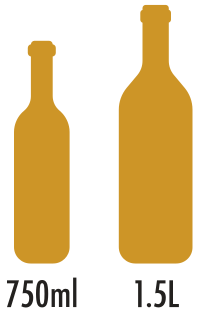
Available formats
Barolo
DOCG Capalot
Intense, savory, with elegant balsamic and hydrocarbon notes
Marked minerality and notes of hydrocarbon enhanced by varietal elegance. Interesting for the scents that recall flint and graphite perfectly balanced with the fruity notes of cherry in syrup and small fruits, the floral notes of rose and violet, and the balsamic tones reminiscent of eucalyptus, resin and medicinal herbs.
Grape variety
Nebbiolo
Harvest
Given the good vegetative energy that characterizes this sub-area, the laborious manual operations of leaf removal and thinning carried out during the summer months are decisive, essential to achieve a good vegetative balance, which is fundamental for the production of an excellent wine.
The harvest with manual selection takes place in the first days of October, usually delayed to ensure complete fruit ripeness with balanced acidity and polyphenolic components and an overall improvement in wine quality.
Winemaking
The grapes are gently destemmed with light crushing and subsequent cold static maceration on the skins to promote the natural enzymatic processes of 36 hours. Frequent punching down follows, carried out with extreme care at a temperature of 26° to promote the production of the complex aromatic set and the extraction of the wide polyphenolic spectrum by stimulating the fermentation processes, capable of transferring the mineral and hydrocarbon notes characteristic of this sub-area from the grape to the wine. After about 15 days of fermentation, the cap is splinted for a further maceration of over a month during which malolactic fermentation is completed.
After pressing off and racking to remove the coarse lees, Barolo Capalot remains on the yeast for about a month, a period in which malolactic fermentation is completed, it acquires volume, richness and the characteristic fruity and spicy notes.
This is followed by an 18-month oak aging in second and third passage barrels and a subsequent year in large Slavonian barrels. This is followed by a year's maturation in the bottle during which the wine softens, the floral, fruity and spice notes grow and expand and the more complex balsamic notes and nuances of hydrocarbons, lacquers and resin appear.
Serving suggestion
Temperature: 16-18°C. A versatile wine: intriguing for its flavour combined with balsamic and smoky notes of graphite and flint
Glass: Balloon-shaped glass
Pairings
Wine suitable for multiple combinations such as both hot and cold appetizers, savory pies or first courses with meat sauce where it manages to express a drinkability that excites for its fresh richness and flavor. It finds the finest combination alongside lamb, pork and especially beef dishes: especially for preparations on the grill with rare cooking where the notes of wine and meat blend with great harmony. Also excellent with game and medium-long aged cheeses.
Tasting notes
Colour: intense and brilliant ruby red. More evolved shades appear with advancing age.
Bouquet: immediate, fresh and balsamic. Red fruit notes stand out with nuances of cherry in syrup and small berries: ripe blackberries, blueberries and raspberries. This is followed by floral sensations of violet, rose, and above all balsamic tones reminiscent of resin, eucalyptus and medicinal herbs with nettle and wild mint – menthol – prominently featured. The marked mineral and smoky scents that recall hydrocarbons, flint with a hint of undergrowth and spices (star anise and licorice) close the profile.
Palate: soft, enveloping and harmonious with black berries and interesting mineral sensations that make it fresh and savory on the palate. It expresses elegance and structure with dense and silky tannins (soft but well present) that leave room for mentholated tones and a hint of hydrocarbons and toasted notes.
Light vein of licorice, goudron and bitter chocolate powder on the finish (tempered by a pleasant acidity and good alcohol).
it impresses with its gustatory richness and its harmonious completeness. Its elegant tannins begin to spread on the palate without weighing it down and then turn into soft and enveloping sensations of cherry in syrup, licorice and chocolate powder, very long and persistent. A fresh mentholated retro-nasal sensation and characteristic notes of tobacco and goudron are pleasant on the finish.
Vineyard characteristics
Area of origin: Capalot - La Morra. A beautiful vineyard located on the imposing hill of La Morra, dominating the entire panorama of the Langhe from its nearly summit position. The very sunny exposure and the high temperature variations guarantee a generous aromatic heritage, allowing to accentuate even more the flavour combined with intense floral, fruit and spice notes.
Exposure: East
Average altitude: 390 m above sea level
Year of planting: 1960 - 2021
Soil: Laminated Sant'Agata marl interspersed with layers of sandstone and conglomerates. In these vineyards small but significant fossil remains have been found, proving the marine sedimentary origin, and the toponym "Pria" corresponded in ancient times to the term "Pietra".
Available formats
Capalot DOCG
Area of origin: Capalot - La Morra.
Beautiful and extensive vineyard located on the imposing hill of La Morra, from where you have the impression of being on a large terrace overlooking a sea of vineyards, which change shape and colour according to the processing and the seasons. The very sunny exposure and the high temperature changes guarantee a generous aromatic heritage.
Given the good vegetative energy that characterizes this sub-area, laborious summer leaf removal and thinning operations are crucial to ensure optimal ripening of the very valuable small bunches.
Exposure: East
Average altitude: 390 m above sea level
Year of planting: 1960 - 2021
Soil: Laminated Sant'Agata marls interspersed with layers of sandstone and conglomerates with small fossil remains, proving the marine sedimentary origin; in fact, the historic toponym "Pria" corresponded in ancient times to the term "Pietra". Among the marls there is also occasionally the presence of alluvial soil residues in the Conglomerates of La Morra.
Products obtained:
Our heritage
For over a century, our family has preserved a winemaking tradition that is reflected in our historic labels, true symbols of the winery's identity. From the first vinifications in the vineyards of La Morra to the most recent productions, each label tells a passage of our evolution.