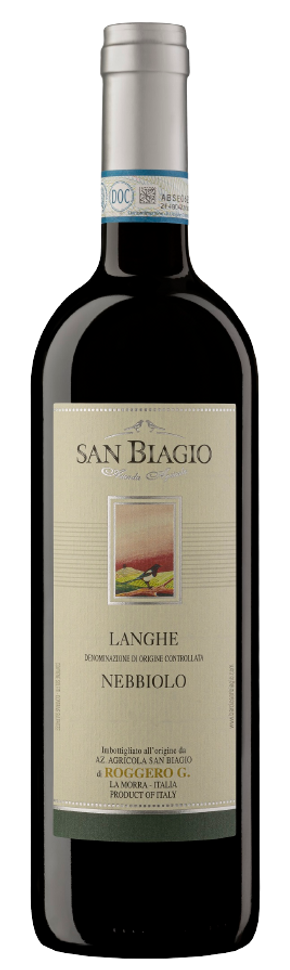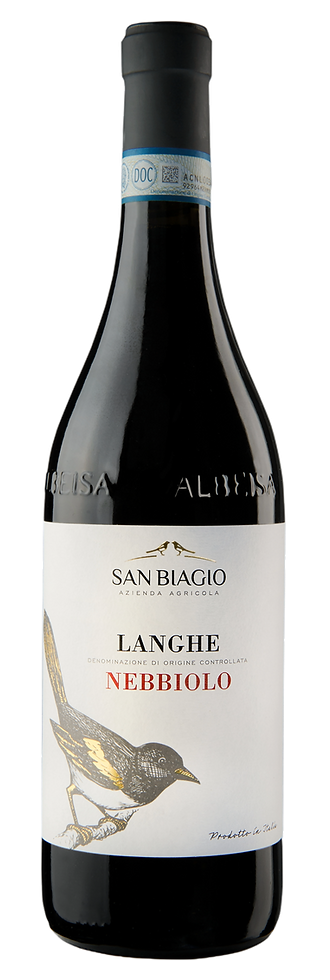
Langhe

DOC Nebbiolo

Elegance, sweetness and charm

A wine that better than all other can represent the tradition, varietal elegance and identity of a unique territory like the Langhe for elegance and balance. The history of Nebbiolo indeed likely begins in pre-Roman times, with the first rudimentary vine cultivation in the Ligurian-Piedmont region. Already in Roman times, the agronomy writer Columella included the Nebbiolo grape in "De Re Rustica" (first century AD), the most comprehensive treatise on agriculture of antiquity.

  • Grape variety

    Nebbiolo

  • Harvest

    With manual selection, preceded by significant summer thinning, it falls towards the beginning of October; it is usually slightly anticipated by virtue of the average advanced age and the particular basin shape of the vineyard that allows it to capture heat and retain it during the night.

    Only thus can optimal ripeness of the polyphenols responsible for the varietal elegance of Nebbiolo be achieved.

  • Winemaking

    The grapes are gently destemmed with light crushing and subsequent cold static maceration on the skins to promote the natural enzymatic processes of 24-36 hours. Frequent punching down follows, carried out with extreme care at a temperature of 24° to stimulate the development of fermentation processes and promote the production of the rich aromatic set and a good extraction of the noblest polyphenols. After about 20 days of fermentation, the cap is splinted for a further maceration of one month during which the malolactic fermentation is completed and the sweetest and most complex notes appear. 

    After pressing off and preliminary racking to remove the coarse lees, Langhe Nebbiolo matures in medium-sized Slavonian oak barrels for 24-36 months, of which about 1-2 months on the lees, a period during which it acquires volume, richness and the floral, fruity and spicy sensations expand. This is followed by a 12-month bottle ageing during which the wine is softened, the balsamic notes reminiscent of eucalyptus, medicinal herbs are accentuated and the more complex ethereal ones of lacquer and resin appear.

  • Serving suggestion

    Temperature: 16-18°C.  It amazes for the immediacy and balance with which it expresses elegance and richness. Further ageing embellishes the refinement and varietal complexity that Nebbiolo is able to express in the Langhe: 10-20 years

    Glass: Balloon-shaped glass

  • Pairings

    A wine suitable for multiple combinations, even for structured dishes where it manages to express a drinkability that excites for its sweetness and persistence on the palate. It finds an excellent combination next to both hot and cold appetizers, savoury pies and first courses, second courses of red meat and game, medium and long-aged cheeses. Excellent as a meditation wine.

  • Vineyard characteristics

    Produced from a historical area already reported in the municipal land registry of 1477.

    Exposure: East – South-East

    Average altitude: 270 m above sea level

    Year of planting: 1965-1990

    Soil: laminated Sant'Agata marls, Diano d'Alba sandstones mixed with sandy Sant'Agata marls

  • Tasting notes

    Colour: intense and brilliant ruby red with more mature garnet nuances with advancing age

    Bouquet: immediate, ample, intense and complex bouquet. Notes of jam, cherry in syrup, face powder, wild rose and violet with evident nuances of berries, well blended, are distinguished: ripe blackberries, blueberries and raspberries. The spicy hints of star anise and balsamic tones reminiscent of eucalyptus, resin, medicinal herbs and menthol are suggestive. Pleasant on the finish, especially for the more refined wines, the sensations of licorice, mushrooms and dried figs, with nuances of undergrowth, tobacco and leather

    Palate: full, enveloping and harmonious, it strikes for its gustatory complexity; sweet notes of fruit and spices prevail with pleasant hints of black berry fruit jam and cooked plum. Soft yet well-present tannins with evident sensations of licorice, tobacco and goudron in the finish tempered by a pleasant acidity and good alcohol.

  • Available formats


Technical sheet and useful files View press kit

Langhe

DOC Nebbiolo

Elegance, sweetness and charm

A wine that better than all other can represent the tradition, varietal elegance and identity of a unique territory like the Langhe for elegance and balance. The history of Nebbiolo indeed likely begins in pre-Roman times, with the first rudimentary vine cultivation in the Ligurian-Piedmont region. Already in Roman times, the agronomy writer Columella included the Nebbiolo grape in "De Re Rustica" (first century AD), the most comprehensive treatise on agriculture of antiquity.

  • Grape variety

    Nebbiolo

  • Harvest

    With manual selection, preceded by significant summer thinning, it falls towards the beginning of October; it is usually slightly anticipated by virtue of the average advanced age and the particular basin shape of the vineyard that allows it to capture heat and retain it during the night.

    Only thus can optimal ripeness of the polyphenols responsible for the varietal elegance of Nebbiolo be achieved.

  • Winemaking

    The grapes are gently destemmed with light crushing and subsequent cold static maceration on the skins to promote the natural enzymatic processes of 24-36 hours. Frequent punching down follows, carried out with extreme care at a temperature of 24° to stimulate the development of fermentation processes and promote the production of the rich aromatic set and a good extraction of the noblest polyphenols. After about 20 days of fermentation, the cap is splinted for a further maceration of one month during which the malolactic fermentation is completed and the sweetest and most complex notes appear. 

    After pressing off and preliminary racking to remove the coarse lees, Langhe Nebbiolo matures in medium-sized Slavonian oak barrels for 24-36 months, of which about 1-2 months on the lees, a period during which it acquires volume, richness and the floral, fruity and spicy sensations expand. This is followed by a 12-month bottle ageing during which the wine is softened, the balsamic notes reminiscent of eucalyptus, medicinal herbs are accentuated and the more complex ethereal ones of lacquer and resin appear.

  • Serving suggestion

    Temperature: 16-18°C.  It amazes for the immediacy and balance with which it expresses elegance and richness. Further ageing embellishes the refinement and varietal complexity that Nebbiolo is able to express in the Langhe: 10-20 years

    Glass: Balloon-shaped glass

  • Pairings

    A wine suitable for multiple combinations, even for structured dishes where it manages to express a drinkability that excites for its sweetness and persistence on the palate. It finds an excellent combination next to both hot and cold appetizers, savoury pies and first courses, second courses of red meat and game, medium and long-aged cheeses. Excellent as a meditation wine.

  • Vineyard characteristics

    Produced from a historical area already reported in the municipal land registry of 1477.

    Exposure: East – South-East

    Average altitude: 270 m above sea level

    Year of planting: 1965-1990

    Soil: laminated Sant'Agata marls, Diano d'Alba sandstones mixed with sandy Sant'Agata marls

  • Tasting notes

    Colour: intense and brilliant ruby red with more mature garnet nuances with advancing age

    Bouquet: immediate, ample, intense and complex bouquet. Notes of jam, cherry in syrup, face powder, wild rose and violet with evident nuances of berries, well blended, are distinguished: ripe blackberries, blueberries and raspberries. The spicy hints of star anise and balsamic tones reminiscent of eucalyptus, resin, medicinal herbs and menthol are suggestive. Pleasant on the finish, especially for the more refined wines, the sensations of licorice, mushrooms and dried figs, with nuances of undergrowth, tobacco and leather

    Palate: full, enveloping and harmonious, it strikes for its gustatory complexity; sweet notes of fruit and spices prevail with pleasant hints of black berry fruit jam and cooked plum. Soft yet well-present tannins with evident sensations of licorice, tobacco and goudron in the finish tempered by a pleasant acidity and good alcohol.

  • Available formats


Technical sheet and useful files View press kit

Bricco San Biagio

Area of origin: Bricco San Biagio - La Morra.

Sanctus Blaxius*: historical toponym already reported in the municipal land registry of 1477; until the fifteenth century the homonymous church and manor castle stood here (ecclesia et castrum Sancti Blaxii) now disappeared, the strong point of Marcenasco.


Magnificent and important, our Bricco San Biagio vineyard is characterized by the exclusive presence in La Morra of the Sandstones of Diano d'Alba, by the excellent exposure and by the particular basin shape that allows you to capture heat by retaining it during the night. It lies on the homonymous hilltop which stands rounded as a strategic point of the territory and can be recognized from afar by the large oak that stands out in the centre and which distinguishes the oldest part intended for Barolo RISERVA.


Exposure: East – South-East

Average altitude: 270 m above sea level

Year of planting: 1965

Soil: Sandstones of Diano d'Alba and marginally Sant'Agata Fossil and Sandy Marls


*A. Gambera, B. Molino, La Morra fra Quattrocento e Cinquecento, vol. II, I toponimi, Agorà e Comune di La Morra, 2019

Products obtained:

Our heritage

For over a century, our family has preserved a winemaking tradition that is reflected in our historic labels, true symbols of the winery's identity. From the first vinifications in the vineyards of La Morra to the most recent productions, each label tells a passage of our evolution.