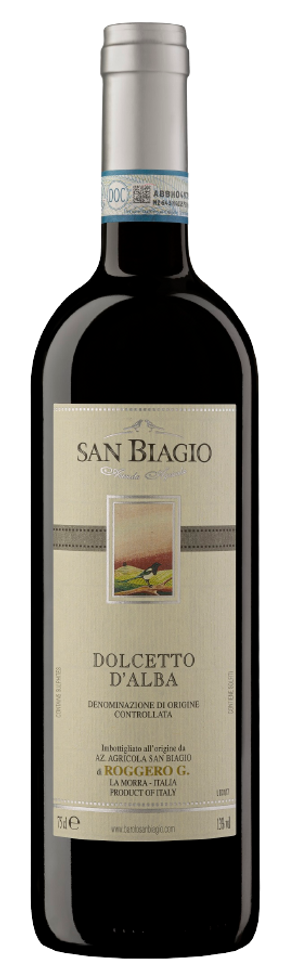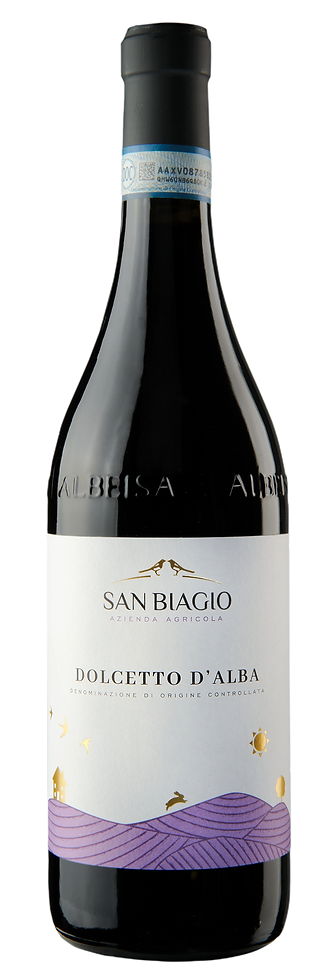
Dolcetto d'Alba
DOC
Inviting, honest and generous
An extraordinary everyday wine. On an organoleptic level, the excellent balance between the intense fruity and floral notes, the appropriate tannicity and those characterizing this wine such as Amaretto and Violet stands out.
Grape variety
Dolcetto grown in Guyot with sustainable viticulture; a delicate variety, which requires special attention in the vineyard and during vinification. Companion of daily dining, in the Langhe it has been cultivated since time immemorial because in its simplicity it is an extraordinary wine, capable like few others of revealing in its nuances both the shortcomings and merits of the hand that produced it.
Harvest
The grapes are harvested by hand in the first half of September.
Winemaking
The start of alcoholic fermentation is followed by frequent punching down carried out with extreme care at a temperature of 24° to stimulate the balanced extraction of the anthocyanins responsible for the intense color of the dolcetto, also favoring the production of the rich aromatic set with the particular fruity and floral notes.
After pressing off and racking to remove the coarse lees, the Dolcetto remains on the lees for about 12-18 days, a period in which malolactic fermentation is also completed, acquiring volume, richness and the characteristic fragrant note. This ageing concludes with cooling to -2-4°C for a natural tartaric stabilization with the sole use of cold.
After final racking, ageing in barrel continues until April, followed by the bottling and subsequent minimum ageing of 3 months, a period during which the balance between fruity, floral notes, appropriate tannicity and those characterizing this wine such as Amaretto and violet, is optimized.
Serving suggestion
Temperature: 16-18°C and consume it preferably within 4 years.
Pairings
A wine with a simple character and immediate pleasantness, it is excellent as an aperitif or in combination with both hot and cold appetizers, first courses, savoury pies, second courses of red meats and medium-aged cheeses.
Tasting notes
Colour: intense ruby red, with very marked reflections of violet and blackberry.
Bouquet: vinous, fragrant, striking for its intense floral note, with inviting hints of ripe fruit among which cherry and plum stand out, followed by those of amaretto and violet characterizing this wine; sometimes a slight herbaceous note on the finish.
Palate: young, fresh. Floral sensations of ripe fruit recur with a persistent velvety sensation that is completed in a pleasant aftertaste of almond and slightly bitter in the finish.
Vineyard characteristics
Area of origin: La Morra and Roddi
Exposure: South
Average altitude: 270 - 280 m above sea level
Soil: Sant'Agata marl
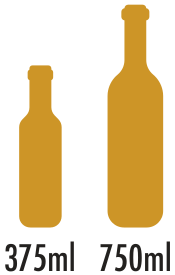
Available formats
Dolcetto d'Alba
DOC
Inviting, honest and generous
An extraordinary everyday wine. On an organoleptic level, the excellent balance between the intense fruity and floral notes, the appropriate tannicity and those characterizing this wine such as Amaretto and Violet stands out.
Grape variety
Dolcetto grown in Guyot with sustainable viticulture; a delicate variety, which requires special attention in the vineyard and during vinification. Companion of daily dining, in the Langhe it has been cultivated since time immemorial because in its simplicity it is an extraordinary wine, capable like few others of revealing in its nuances both the shortcomings and merits of the hand that produced it.
Harvest
The grapes are harvested by hand in the first half of September.
Winemaking
The start of alcoholic fermentation is followed by frequent punching down carried out with extreme care at a temperature of 24° to stimulate the balanced extraction of the anthocyanins responsible for the intense color of the dolcetto, also favoring the production of the rich aromatic set with the particular fruity and floral notes.
After pressing off and racking to remove the coarse lees, the Dolcetto remains on the lees for about 12-18 days, a period in which malolactic fermentation is also completed, acquiring volume, richness and the characteristic fragrant note. This ageing concludes with cooling to -2-4°C for a natural tartaric stabilization with the sole use of cold.
After final racking, ageing in barrel continues until April, followed by the bottling and subsequent minimum ageing of 3 months, a period during which the balance between fruity, floral notes, appropriate tannicity and those characterizing this wine such as Amaretto and violet, is optimized.
Serving suggestion
Temperature: 16-18°C and consume it preferably within 4 years.
Pairings
A wine with a simple character and immediate pleasantness, it is excellent as an aperitif or in combination with both hot and cold appetizers, first courses, savoury pies, second courses of red meats and medium-aged cheeses.
Tasting notes
Colour: intense ruby red, with very marked reflections of violet and blackberry.
Bouquet: vinous, fragrant, striking for its intense floral note, with inviting hints of ripe fruit among which cherry and plum stand out, followed by those of amaretto and violet characterizing this wine; sometimes a slight herbaceous note on the finish.
Palate: young, fresh. Floral sensations of ripe fruit recur with a persistent velvety sensation that is completed in a pleasant aftertaste of almond and slightly bitter in the finish.
Vineyard characteristics
Area of origin: La Morra and Roddi
Exposure: South
Average altitude: 270 - 280 m above sea level
Soil: Sant'Agata marl
Available formats
Vineyard Characteristics
Area of origin: La Morra and Roddi
Exposure: South
Average altitude: 270 - 280 m above sea level
Soil: Sant'Agata marl
Our heritage
For over a century, our family has preserved a winemaking tradition that is reflected in our historic labels, true symbols of the winery's identity. From the first vinifications in the vineyards of La Morra to the most recent productions, each label tells a passage of our evolution.